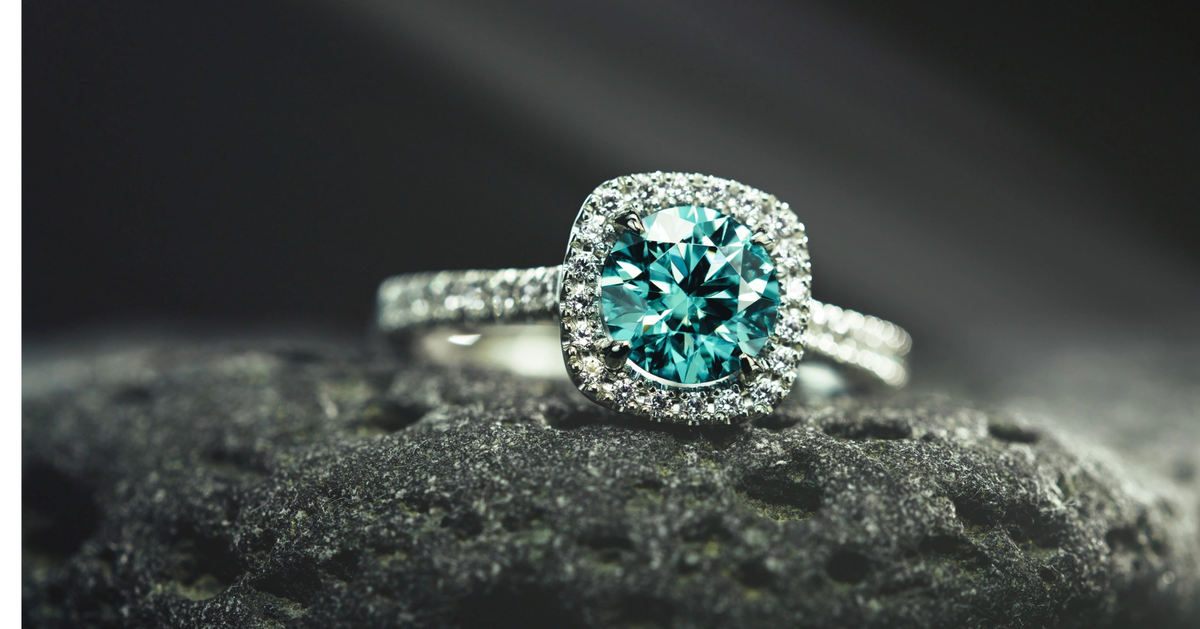
Diamonds are often celebrated for their brilliance, their fire, and their symbolism—but the true magic lies in the details most people never see. Beyond the discreet laser‑inscribed numbers on the girdle, every diamond holds a universe of hidden stories, scientific marvels, and natural artistry. These are the secrets that gemologists obsess over, collectors chase, and luxury houses quietly use to elevate their most exceptional pieces.
The Ancient Signatures: Growth Patterns and Graining
Every diamond begins as a crystal growing deep within the Earth, and that growth leaves behind microscopic patterns—lines, wisps, and textures that act like a geological diary. Some appear as smoky veils, others as geometric striations, and some shimmer only under specific lighting. These patterns are entirely unique, impossible to replicate, and often reveal the conditions under which the diamond formed millions or even billions of years ago.
The Glow Within: Fluorescence and Phosphorescence
Under ultraviolet light, many diamonds reveal a hidden glow. Blue fluorescence is the most common, but rarer hues—yellow, orange, even red—exist in only a tiny fraction of stones. A select few diamonds continue glowing after the UV light is turned off, a phenomenon called phosphorescence. The Hope Diamond is the most famous example, emitting an eerie red light that lingers like a heartbeat.
For collectors, fluorescence isn’t just a trait—it’s a secret personality.
Diamond DNA: The Science of Type Classification
Beyond the 4Cs lies a deeper classification system that reveals a diamond’s elemental purity.
Type IIa diamonds are the purest of the pure—no nitrogen, exceptional brightness, and historically associated with legendary stones.
Type IIb diamonds contain boron, giving them a blue tint and the rare ability to conduct electricity.
Type Ib diamonds are uncommon in nature and often display intense yellow hues.
This “diamond DNA” influences everything from color to brilliance to rarity.
Inclusions That Tell a Story
Inclusions are often misunderstood as flaws, but many are tiny works of art. Some diamonds contain microscopic crystals—garnet, olivine, or even other diamonds—trapped during formation. Others have feather-like brushstrokes or soft, cloud-like clusters that diffuse light in dreamy ways. These internal landscapes make each stone one-of-a-kind, and some collectors seek out inclusions with symbolic shapes or poetic beauty.
Light Performance: The True Measure of Beauty
Two diamonds with identical grades can look dramatically different because of how they handle light. High-end labs and cutters analyze:
Brilliance (white light return)
Fire (rainbow dispersion)
Scintillation (sparkle pattern)
Super-ideal cuts, especially round brilliants, can reveal hearts-and-arrows patterns—a sign of extreme precision and craftsmanship.
Color Zoning: The Subtle Art of Tone and Temperature
Even “colorless” diamonds can have undertones. Some carry icy blue whispers, others warm champagne notes. Fancy color diamonds often show rivers or bands of deeper saturation. Expert cutters orient the stone to highlight or minimize these zones, shaping the diamond’s final personality.
Strain Patterns: The Hidden Aurora
When viewed under cross-polarized light, diamonds reveal internal stress patterns—psychedelic swirls, geometric mandalas, or watercolor-like washes. These strain patterns don’t affect durability; instead, they offer another layer of individuality, like a secret aurora trapped inside the stone.
The Original Shape: Nature’s Blueprint
Before a diamond becomes a polished gem, it exists as a raw crystal.
Octahedral crystals often yield the highest clarity stones.
Cubic crystals may inspire fancy shapes.
Dodecahedral crystals can create unusual brilliance patterns.
Some cutters preserve hints of the original form as a nod to the diamond’s natural origins.
Lab-Grown Diamonds: Their Own Hidden Signatures
Lab diamonds have their own internal markers—metallic inclusions from HPHT growth, or fine striations from CVD processes. These aren’t visible to the naked eye, but they tell a story of modern alchemy and technological precision.
The Make: Where Art Meets Geometry
In high jewelry, “make” refers to the artistry of the cut. It’s not just about proportions—it’s about how the facets interact, how the stone performs in motion, and how the cutter balanced weight, beauty, and light. Two diamonds with identical grades can have completely different personalities because of make.
The Diamond’s True Luxury: Its Secrets
The beauty of a diamond isn’t just in its sparkle—it’s in the hidden worlds beneath the surface. These details transform a stone from a commodity into a character, a story, a legacy. For brands, designers, and collectors who understand these nuances, diamonds become more than adornment—they become art.